
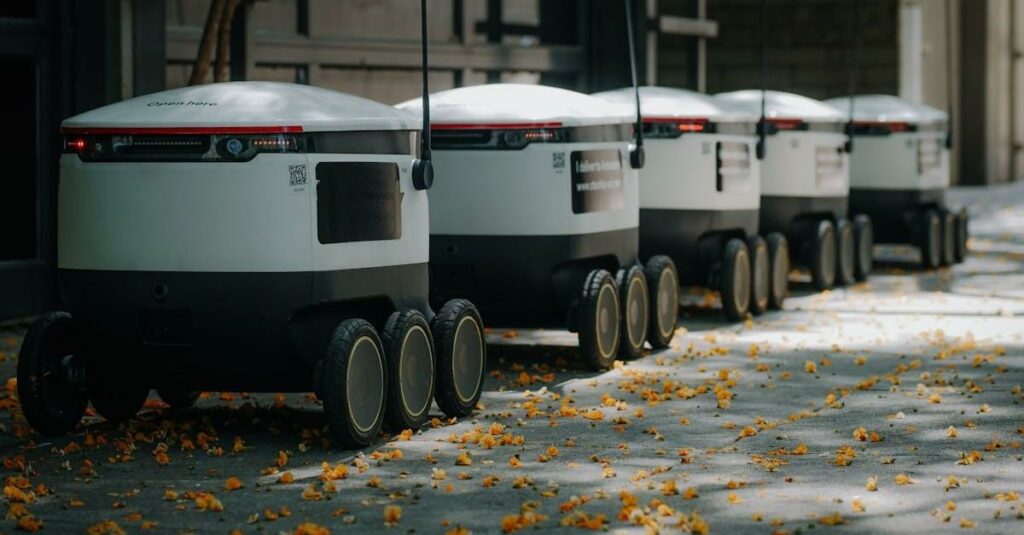
Ever thought about how robots could simplify our lives? Well, brace yourselves. Robotics and autonomous systems are not just the stuff of sci-fi movies anymore. They’re here, ready to change the game. Whether we’re talking about agile drones that navigate complex terrains or robots that can whip up our favorite meals, the technology is advancing faster than we can say, “please pass the remote.” So, grab your favorite drink, sit back, and let’s jump into this intriguing realm.
Understanding Robotics
Types Of Robots
We can categorize robots into several types based on their functions. Industrial robots often reside in factories, assembling everything from cars to electronics at lightning speed. Then we have service robots, aiding us in homes and hospitals. And let’s not forget about exploration robots, like those that roam the Martian surface. Each type plays a unique role in various sectors. All of these contribute to making our lives easier and more efficient.
Applications Of Robotics
The applications of robotics are nearly limitless. In medical fields, surgical robots assist doctors with precision. In agriculture, drones help monitor crops from above, saving time and resources. Entertainment robots, like robotic pets, keep us company. The fact is, every industry is racing to incorporate robotic systems to boost productivity and, let’s face it, impress the neighbors.
The Role Of Autonomous Systems
Key Technologies In Autonomous Systems
We can’t talk about autonomous systems without mentioning the technology that powers them. Artificial intelligence is the backbone, enabling machines to learn and adapt. Sensors play a critical role too, providing real-time data for navigation and decision-making. Combine these elements with machine learning algorithms, and you’ve got machines that can predict and react to complex environments. It’s a beautifully chaotic orchestra of technology truly playing in harmony.
Real-World Applications Of Autonomous Systems
From self-driving cars to automated warehouse robots, the applications are astounding. These systems optimize logistics and reduce human error significantly. In the military, autonomous drones conduct surveillance missions, minimizing risks to personnel. The healthcare sector is exploring autonomous robots for delivery and patient care. This is just the tip of the iceberg, and the best is yet to come.
Challenges And Future Prospects
Ethical Considerations In Robotics
As we advance, ethical concerns arise. What happens when robots have decision-making capabilities? Are we too reliant on technology? It’s vital for us to establish ethical guidelines as we integrate robots into our daily lives. We must ask ourselves tough questions about privacy, safety, and employment in this ever-evolving landscape. Navigating these challenges will require open discussions and collaborative efforts across industries.
Future Development Trends
Looking ahead, we can only imagine where robotics and autonomous systems will take us. Developments in AI and machine learning will likely lead to even smarter, more adaptable robots. We may see robots tailored to personal lifestyles, enhancing our day-to-day experiences. What’s exciting is the cross-disciplinary collaborations that are emerging, blending robotics with biotechnology, energy efficiency, and beyond. The future is bright, my friends, and we’re just getting started.